“But Jesus said, Suffer little children, and forbid them not, to come unto me: for of such is the kingdom of heaven.” — Matthew 19:14 (KJV)
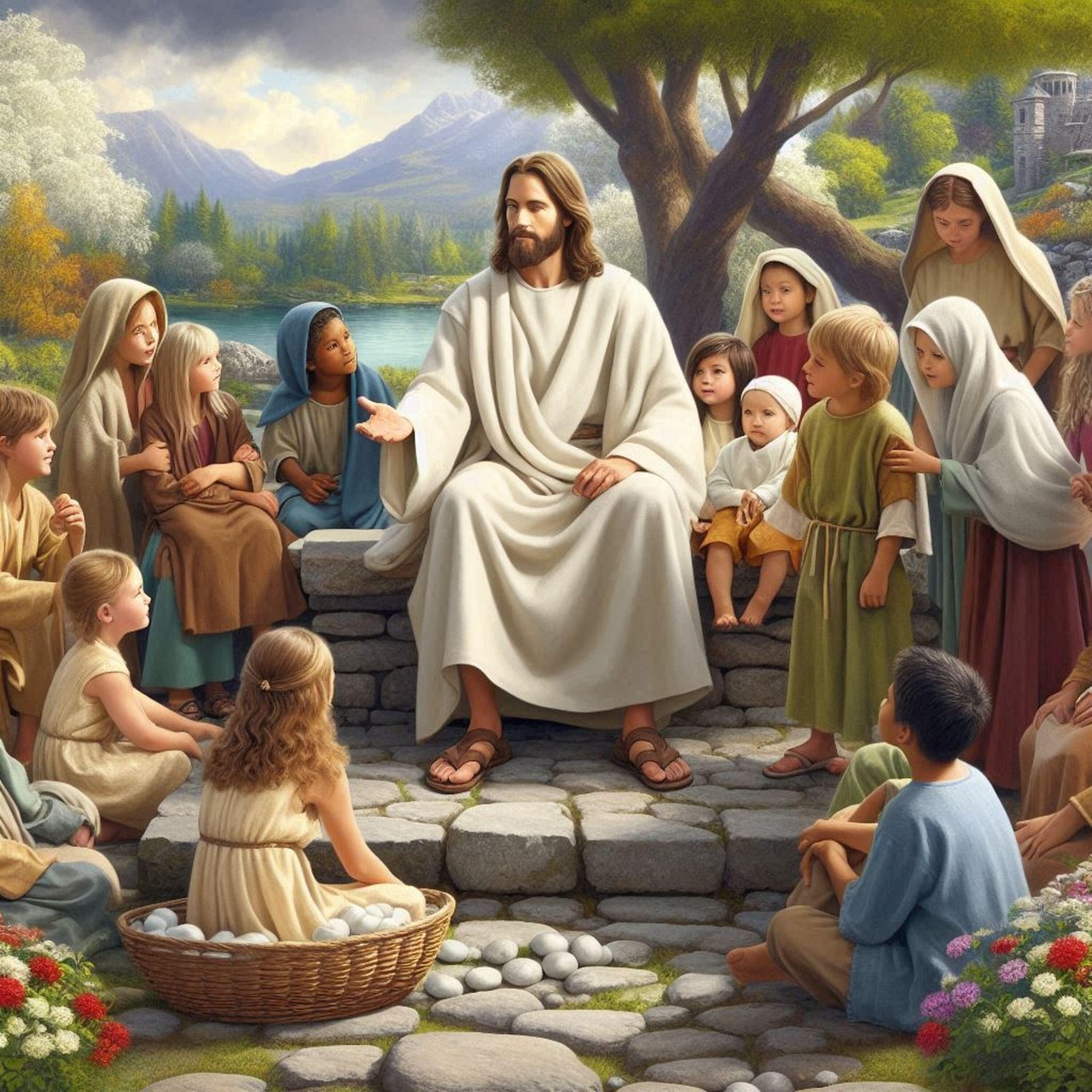
This verse stands as a gentle yet powerful rebuke to those who would gatekeep access to Jesus. In context, the disciples were trying to shield Jesus from interruptions, thinking the children were unworthy or insignificant. But Jesus turns that thinking on its head. His words “suffer little children” mean “allow” or “permit” them to come—revealing not just His openness, but His insistence that purity, vulnerability, and trust are essential traits of kingdom citizens.
He elevates the humble state of a child as a model for faith: not one of naivety, but of sincerity, dependence, and open-hearted wonder. Children come without pretense, without pride, with unguarded souls. Jesus doesn’t just accept them; He affirms that the kingdom belongs to those like them.
This wasn’t merely a cultural statement—it was a spiritual declaration. In a society that often undervalued children, Jesus honored them, made space for them, and validated their presence in the divine narrative.
What does this say about our Lord? It paints a radiant portrait of His tenderness and inclusivity. Jesus is not a distant figure waiting for perfect people to approach. He is the Shepherd who welcomes the fragile, the small, the overlooked.
He is the Defender of innocence, the Champion of the humble, the Friend who makes room at the table without judgment or expectation.
His kingdom is not reserved for the elite—it’s designed for those who lean into Him with childlike trust. That’s radical compassion. That’s divine grace.
To apply this verse in our lives is to create spiritual environments where the vulnerable are cherished. It’s teaching our children about God, not just through instruction, but through example—by showing them love, patience, and the joy of faith. It’s also a personal call: return to simplicity, shed the layers of cynicism, and come to Him with open hands.
In communities, it means we fight against exclusion and spiritual elitism. In our hearts, it means we continually make space for the child within us—the part that still believes, hopes, and trusts.
- If the kingdom of heaven belongs to the childlike, what does it look like for you to embrace simplicity today?
- Could faith be less about answers and more about trust?
- Do You trust the LORD in all you do and in all your paths?
When you do, it will be health and prosperity in spirit and body – and His love will embrace your soul – a feeling which is truly indescribable! (Proverbs 3:5-8)
“LORD- We truly thank You for valuing the smallest among us. Teach us to welcome Your Presence with the innocence and openness of a child. Soften our hearts where pride has hardened them. Help us nurture love, trust, and mercy in our lives, and to offer others the same grace You’ve shown us. In Jesus name, Amen.”