
DEAR GOD: Help Us To Live Our Relationships Honoring You~

🔥 Download I Love Jesus Wallpaper by @alanmcintyre on WallpaperSafari

“And whatsoever ye do, do it heartily, as to the Lord, and not unto men; Knowing that of the Lord ye shall receive the reward of the inheritance: for ye serve the Lord Christ.” —
Colossians 3:23–24


“To Please Him: Living Relationships for Eternal Glory”

In every relationship—whether tender or trying—we are called to reflect Christ. Our thoughts, words, and actions are not merely social exchanges; they are spiritual offerings. When we love sacrificially, forgive freely, and speak truth gently, we are not just serving others—we are pleasing the Lord. Every moment is a chance to glorify Him, especially in the quiet soul-rendering moments of our “room of prayer.”

“Let all your things be done with charity.” — 1 Corinthians 16:14 (KJV)

Charity is not just kindness—it is divine love in motion. It is the heartbeat of Christ pulsing through our interactions. Whether we are misunderstood, mistreated, or cherished, our response must be rooted in Scripture. We are not here to win arguments or seek applause—we are here to serve the Kingdom.

“By this shall all men know that ye are my disciples, if ye have love one to another.” — John 13:35 (KJV)

Our relationships are our witness. The way we treat others—especially those who challenge us—reveals the depth of our discipleship. We must adhere to the teachings of Christ, not just in public, but in private. In our “room of prayer,” we surrender bitterness, pride, and fear. We ask for strength to love well, to forgive deeply, and to walk humbly.

“If ye love me, keep my commandments.” — John 14:15 (KJV)

Obedience is love in action. It is not a burden—it is a blessing. When we live according to the Word, we align ourselves with eternal purpose. Every act of faithfulness, every moment of restraint, every prayer whispered in secret is seen by God. And when we are called home, it will not be our reputation that matters—it will be our reflection of Christ.

 “LORD, teach us to love as You love. Help us to honor You in every relationship, to obey Your Word with joy, and to seek Your glory above all. In our thoughts, our actions, and our quiet prayers, let us be faithful. May our lives be pleasing to You, And our hearts ready for eternity. In Jesus Christ, Amen.”

DEAR GOD: May Your Holiness Infuse Our Every Thought & Action~

God's Breath Publications » HOLINESS

“But as he which hath called you is holy, so be ye holy in all manner of conversation; Because it is written, Be ye holy; for I am holy.” — 1 Peter 1:15-16 (KJV)


 Walking in His Light

  Holiness is not merely an attribute of God; it is the essence of His being. He is wholly pure, completely set apart, and without blemish. From the beginning, He has called His people into this sacred pursuit—not as an unattainable goal but as a way of life shaped by His presence. In 1 Peter 1:15-16, we find a direct command and a divine standard: Be ye holy; for I am holy.

This call to holiness is not a suggestion or an ideal; it is a requirement for those who desire to walk with the Lord. To be holy is to be consecrated, to reject worldliness, and to dedicate our hearts, minds, and lives to Him. Holiness is not about mere rule-following or self-righteousness. It is about becoming so immersed in God’s presence that His character reflects through us in everything we do, in every word we speak, and in every thought we entertain.

But how can fallen man strive toward holiness when imperfection runs through his veins? The answer is found in grace. God does not expect us to attain holiness on our own—rather, He invites us into the transformational power of His Spirit. As we surrender to Him, He refines us, renews our minds, and purifies our hearts.


Holiness in Yesterday and Today

God’s call to holiness has not changed across the generations. In Leviticus 11:44, the Lord told Israel: “For I am the Lord your God: ye shall therefore sanctify yourselves, and ye shall be holy; for I am holy.” The same God who demanded purity of heart and devotion from Israel is the same God calling His Church today to live set apart.

Many Christians today struggle with what it means to live holy in a world saturated with compromise. What does it mean to walk in holiness when immorality is celebrated and faithfulness is mocked? The answer remains the same as it always has: We fix our eyes on Jesus. We anchor our hearts in His Word. We let His truth shape our behavior rather than the shifting morality of the culture around us.

To be holy is not to be removed from the world but to live within it with a heart that beats for Christ. It is the call to reflect purity in our conversations, kindness in our actions, and integrity in our decisions. Holiness is not just about avoiding sin; it is about actively pursuing righteousness.


Our Eternal Course of Action

Holiness is not a fleeting pursuit. It is eternal. From the moment we step into salvation, the Lord begins His work in us, preparing us for the day when we stand before Him in complete sanctification. This journey does not end when our life on earth does. Revelation 22:11 speaks of the everlasting distinction between righteousness and wickedness: “He that is unjust, let him be unjust still: and he which is filthy, let him be filthy still: and he that is righteous, let him be righteous still: and he that is holy, let him be holy still.”

We must ask ourselves daily: Is my life reflecting the holiness of my Creator? Am I walking in purity and surrender? Each moment we live is an opportunity to choose holiness over indulgence, righteousness over rebellion, faithfulness over fleeting pleasures. Holiness is a daily discipline, an eternal posture, and a lifelong commitment.


“LORD – You are holy beyond measure, perfect in all Your ways. You have called us to walk in purity, to reflect Your righteousness, and to live according to Your truth. Strengthen our hearts so that we may pursue holiness—not out of obligation, but out of love. Guard our minds from distraction, refine our desires, and shape our character to honor You. Let us be set apart, consecrated unto You, walking daily in the beauty of holiness. In Jesus name, Amen.”


Reflective Question:

In what areas of my life do I need to surrender to God so He can refine me in holiness?


May the Lord sanctify your heart and draw you closer to Him. May He strengthen you in righteousness and fill your days with His wisdom. May you walk in the beauty of holiness, standing firm in faith and secure in His everlasting love. In Jesus name, Amen.


DEAR GOD: You Are My Number One Always & Forever~

500+ Beach Sunrise Pictures [Stunning!] | Download Free Images on Unsplash

“The Lord is compassionate and gracious, slow to anger, abounding in love. He will not always accuse, nor will he harbor his anger forever.” – Psalm 103:8-9


Title: The Eternal Compassion of Our Loving God

Commentary: God’s character is one of perfect love and unwavering faithfulness. In Psalm 103, we glimpse His tender care for His children. His compassion is not fleeting, nor is His anger lasting. This reminds us that God’s love is not dependent on our perfection but on His infinite grace. His nature is unchanging, and this certainty offers us stability in a world full of uncertainty.

This verse also reflects God’s patience. He understands our flaws and failures, yet His love remains. Such enduring compassion should inspire us to model grace and forgiveness in our relationships. If God, in His perfect holiness, can be slow to anger, how much more should we—imperfect as we are—strive to extend patience to others?

Reflective Questions:

  • How do we respond to the knowledge of God’s compassion in our daily lives?
  • In what ways can we show patience and love to those who hurt or frustrate us, mirroring God’s example?
  • What steps can we take to truly embrace the security of God’s unchanging nature in times of doubt?

Supportive Scriptures:

  • Lamentations 3:22-23: “Because of the Lord’s great love we are not consumed, for his compassions never fail. They are new every morning; great is your faithfulness.”
  • Exodus 34:6: “The Lord, the Lord, the compassionate and gracious God, slow to anger, abounding in love and faithfulness.”
  • 1 John 4:19: “We love because he first loved us.”

These verses weave a tapestry of hope, each revealing aspects of God’s love that reassure us of His presence and unwavering commitment. They remind us that His love is not just a promise; it is a living reality.


Moral Thoughts: God’s love calls us to reflect His character in our own lives. Whether it’s in acts of kindness, a moment of forgiveness, or a quiet prayer for someone in need, every choice we make can mirror the love He has shown us. His example is a call to action—a challenge to love beyond our limits and trust Him even when the path is unclear.


Prayer: Gracious Lord, we thank You for Your endless compassion and unfailing love. Teach us to rest in the security of Your character and to reflect Your grace in all that we do. Help us to live with patience and forgiveness, honoring You by loving others as You love us. In Jesus name we pray -Amen.


Question of the Day: How can you reflect God’s compassion and patience in a challenging situation today?

DEAR GOD: Your Endless Love & Mercy & Grace Is Humbling~

Beautiful Sunrise Wallpapers - Top Free Beautiful Sunrise Backgrounds ...

A Reflection on Psalm 113:4

Psalm 113:4 declares, “The Lord is high above all nations, and his glory above the heavens!” This verse exalts God’s incomparable majesty and sovereignty. It reminds us that no earthly power, nation, or authority can match His supremacy, nor can the expanse of the heavens contain His glory. To explore this verse is to delve into the grandness of God’s rule, a timeless truth that resonates through history and continues to hold relevance today.

Biblical Overview and Analysis

The placement of Psalm 113 within the Book of Psalms is no coincidence. This chapter is the beginning of the “Hallel Psalms” (Psalms 113–118), traditionally sung by the Israelites during significant celebrations like Passover. These psalms focus on praising God, highlighting His mercy, power, and love for His people.

Psalm 113:4, in particular, emphasizes two critical attributes of God: His transcendence and His glory. To say God is “high above all nations” is not merely geographical; it speaks to His supreme authority and governance over all the earth. Nations rise and fall, leaders come and go, but God’s sovereignty remains eternal and unchallenged.

The phrase “his glory above the heavens” further magnifies His greatness. The heavens, often seen as the pinnacle of beauty and wonder in the ancient world, cannot even begin to encapsulate the fullness of God’s glory. It signifies that God’s majesty surpasses all creation, underscoring His infinite nature.

Examples in Today’s Context

In today’s world, we witness the ebb and flow of nations and political powers. Economies rise, alliances shift, and global landscapes change. For instance, recent global events, from conflicts between nations to debates on climate change, remind us of humanity’s limitations and the futility of placing ultimate hope in worldly systems. In such times, Psalm 113:4 calls believers to lift their eyes above the temporal and finite, recognizing that God’s authority is above all these complexities.

For a personal example, consider how individuals often place their trust in worldly achievements, from career success to technological advancements. While these have their place, none of them can offer the assurance and eternal perspective that God provides. This verse invites us to realign our focus, placing our trust in the one who reigns supreme.

Supportive Scripture

  1. Isaiah 40:22 – “It is he who sits above the circle of the earth, and its inhabitants are like grasshoppers; who stretches out the heavens like a curtain, and spreads them like a tent to dwell in.” This verse reinforces God’s transcendence and creative power.
  2. Daniel 2:21 – “He changes times and seasons; he removes kings and sets up kings; he gives wisdom to the wise and knowledge to those who have understanding.” This shows His control over earthly governance.
  3. Ephesians 1:21 – “Far above all rule and authority and power and dominion, and above every name that is named, not only in this age but also in the one to come.” This highlights Christ’s exalted position, emphasizing God’s ultimate authority.
  4. Revelation 11:15 – “The kingdom of the world has become the kingdom of our Lord and of his Christ, and he shall reign forever and ever.” This assures believers of God’s eternal reign.

Prayer

Lord Almighty, we come before You in awe of Your unmatched greatness. You are exalted above all nations, and Your glory surpasses the heavens. Teach us to trust in Your sovereignty when the world around us feels uncertain. Remind us of Your eternal reign, and help us to live as reflections of Your glory, pointing others to Your majesty. May our praise be unceasing, acknowledging Your authority in every aspect of our lives. In Jesus’ name, we pray. Amen.

Thought for the Day

In a world that is constantly changing, where do you place your trust? Let today be a reminder that God’s power is above all earthly realms, His glory above all creation. Rest in His sovereignty and let His eternal majesty guide your path. How can you reflect His glory in your actions today?


Beautiful Sunrise Wallpapers - Top Free Beautiful Sunrise Backgrounds ...

DEAR GOD: Help Us To Grow In Grace Through Your Word~

Grace of our Lord Jesus Christ - Pastor Charles Finny Arumainayagam

Growing in Grace Through the Word

  “Like newborn babies, you must crave pure spiritual milk so that you will grow into a full experience of salvation. Cry out for this nourishment, now that you have had a taste of the Lord’s kindness.” – 1 Peter 2:2-3 (NLT)


Commentary: This verse encapsulates the essence of spiritual growth and the believer’s journey toward maturity in Christ. Peter’s analogy of “newborn babies” craving “pure spiritual milk” paints a picture of dependency, eagerness, and a natural hunger for sustenance. Just as a newborn instinctively cries out for milk to sustain life and grow, so should believers long for the “sincere milk of the Word”—the untainted truths of Scripture. This metaphor highlights the importance of the Word of God as the foundational nourishment that sustains and grows our faith.

When Peter mentions “pure spiritual milk,” he is speaking to the essence of God’s Word, uncorrupted by worldly distractions or false teachings. In our modern world, where countless voices compete for attention, the need for such purity is ever relevant. The Word serves as the foundation for understanding God’s will, discerning truth, and resisting the pull of a society often swayed by fleeting values.

Hebrews 4:12 reminds us: For the word of God is alive and powerful. It is sharper than the sharpest two-edged sword, cutting between soul and spirit, between joint and marrow. It exposes our innermost thoughts and desires.

Furthermore, this growth is not merely intellectual but deeply transformative. Peter ties it to the experience of salvation, suggesting that the pursuit of God’s Word leads believers into the fullness of their relationship with Him. It is not enough to “taste” that the Lord is good; we must consistently feed on His Word to experience the depth of His kindness and grace.

Through this, we grow in character, bearing the fruits of the Spirit: But the Holy Spirit produces this kind of fruit in our lives: love, joy, peace, patience, kindness, goodness, faithfulness, gentleness, and self-control (Galatians 5:22-23).

Biblical values derived from these passages are strikingly applicable today. In a culture that often prioritizes self-sufficiency, Peter reminds us of the beauty of dependence—not on human solutions but on divine sustenance.

To grow spiritually, we must cultivate a desire for God’s Word, setting aside distractions and counterfeit sources of “nourishment.” In doing so, we align with Christ’s call to abide in Him: Yes, I am the vine; you are the branches. Those who remain in me, and I in them, will produce much fruit. For apart from me you can do nothing (John 15:5). His Word equips us to stand firm against the currents of secularism, cynicism, and despair, offering hope that is both eternal and unshakable.

Reflective Questions:

  • What steps can I take to develop a deeper hunger for the truths in God’s Word?
  • Are there distractions or influences in my life that dilute the “pure spiritual milk” God offers?
  • How can the kindness of the Lord I’ve experienced inspire me to trust Him more?

Prayer:

“LORD my Gracious and loving Father, we come before You as children yearning for the nourishment only Your Word can provide. Thank You for giving us the sincere milk of truth that feeds our souls and draws us closer to You. Lord, help us to crave Your Word with undivided hearts, removing anything that hinders our growth in You. Let the kindness and grace we have tasted in Your presence fill us with gratitude and a renewed passion to grow deeper in our relationship with You. May Your Word transform us, equipping us to live faithfully and boldly in a world in need of Your light. In Jesus’ name, Amen.”

Reflective Question for the Day:

Am I intentionally making space in my life to drink deeply from God’s Word, or am I relying on spiritual “snacks” to sustain my faith? Delve deeply into this and ask for the LORD to guide you as you do so…

God Bless you all~


DEAR GOD: May We Always Trust Your Purpose & Will~

Jesus Love Wallpaper Online | cityofclovis.org

“And we know that all things work together for good to them that love God, to them who are the called according to his purpose.” -Romans 8:28


Romans 8:28 Commentary and Reflection

Romans 8:28 is a powerful affirmation of God’s sovereignty, love, and purposeful design for our lives. This verse reminds us that God’s providence extends to all areas of life, and His plans are for the ultimate good of those who love Him and are called according to His purpose. Let us unpack its significance in a way that resonates with both the biblical perspective and our lives today.

Biblical Insights and Life Application

  1. “All things work together for good”: This declaration is both comforting and challenging. It emphasizes God’s divine orchestration of every detail—joys, trials, victories, and setbacks. The “good” mentioned here does not always mean immediate comfort or success but aligns with God’s ultimate purpose: conforming us to the image of Christ (Romans 8:29). It is a call to trust Him even when circumstances seem bleak, believing that He is weaving a greater masterpiece.

    Life today: In a world filled with uncertainties—whether financial struggles, health challenges, or relational hardships—this truth invites us to shift our perspective. Rather than questioning, “Why is this happening to me?” we are encouraged to ask, “How is God shaping me through this?”

  2. “To them that love God”: Love for God is the anchor of this promise. It is not a transactional love but one rooted in deep, abiding faith and devotion. Those who truly love God prioritize their relationship with Him, and their lives reflect His grace and truth.

    Reflection: Consider your personal relationship with God. Is it one of wholehearted surrender, or is it influenced by the changing tides of circumstances? Loving God calls for consistent prayer, worship, and a willingness to follow His commands.

  3. “To them who are the called according to His purpose”: God’s calling is both universal (inviting all to salvation) and specific (assigning each individual a unique role in His kingdom). Being “called” speaks to living with intentionality, grounded in His word, and seeking His purpose above all.

    Application: In today’s fast-paced life, purpose can feel elusive. This verse reassures us that God’s calling is not random—it is tailor-made for each of us, encompassing our gifts, passions, and circumstances.

Reflective Questions

  • How have I witnessed God’s ability to bring good from difficult situations in my life or the lives of others?
  • In what ways am I actively expressing my love for God in my daily choices?
  • Am I aligning my pursuits and goals with God’s purpose for me?

Moral Thoughts and Takeaways

  • Trusting God’s plan requires humility and patience, especially when outcomes differ from our expectations.
  • Loving God involves daily commitment, not just moments of convenience.
  • Living according to God’s purpose means surrendering our agendas and embracing His divine direction.

Loving Witness to Christ

Living out Romans 8:28 is a profound way to witness to Christ’s love. When we demonstrate unwavering faith amidst trials, others are drawn to the source of our hope. Sharing testimonies of God’s faithfulness in our lives can inspire and encourage those around us. For instance:

  • A believer who finds peace after losing a job exemplifies trust in God’s provision.
  • Someone who forgives deeply, despite being wronged, reflects Christ’s transformative power.

Examples of Loving Christ

  • Spending time in scripture and prayer, seeking to know Him more.
  • Serving others selflessly, mirroring His heart for humanity.
  • Standing firm in faith, even when it’s countercultural or costly.

Prayer and Blessing

“Heavenly Father, thank You for the assurance that You work all things together for good for those who love You. Help us to trust in Your perfect plan, even when we cannot see the way forward. Deepen our love for You and align our hearts with Your purpose. Use our lives as a testimony of Your grace and faithfulness. May we live each day with courage and conviction, knowing that You are with us always.

Father, I ask You to bless each reader today. Grant them peace in the midst of their challenges, joy in their journey, and a renewed sense of purpose in You. In Jesus’ name, Amen.”

Meditative Scripture for the Day

“The Lord is my shepherd; I shall not want. He makes me lie down in green pastures. He leads me beside still waters. He restores my soul. He leads me in paths of righteousness for his name’s sake.”Psalm 23:1-3 (ESV)


Loving God with all our Heart

DEAR GOD: You Are The True God Of All Comfort~

God of ALL Comfort

“Blessed be God, even the Father of our Lord Jesus Christ, the Father of mercies, and the God of all comfort; Who comforteth us in all our tribulation, that we may be able to comfort them which are in any trouble, by the comfort wherewith we ourselves are comforted of God.”
2 Corinthians 1:3-4


The God of All Comfort: Reflecting His Light in Our Lives

2 Corinthians 1:3-4 (KJV) beautifully encapsulates the heart of Christian living: “Blessed be God, even the Father of our Lord Jesus Christ, the Father of mercies, and the God of all comfort; Who comforteth us in all our tribulation, that we may be able to comfort them which are in any trouble, by the comfort wherewith we ourselves are comforted of God.”

These verses reveal profound truths about the expectations God has for His children, the transformative light of salvation, and the eternal implications of our spiritual alignment.


God’s Expectations for His Children

God desires a life of faith, obedience, and love from His children. By aligning ourselves with His will and purpose, we walk in the path of righteousness and peace. As Micah 6:8 (KJV) reminds us, “He hath shewed thee, O man, what is good; and what doth the Lord require of thee, but to do justly, and to love mercy, and to walk humbly with thy God?” The Lord calls us to reflect His mercy and light, becoming vessels of His comfort to a hurting world.


The Consequences of Misalignment

Choosing to walk apart from God’s will leads to spiritual depletion. Romans 6:23 (KJV) solemnly states, “For the wages of sin is death; but the gift of God is eternal life through Jesus Christ our Lord.” Without the guiding light of Christ, our souls face emptiness and separation from God. On the other hand, submitting to His will ushers in abundant life, both here on earth and in eternity.


Steps of Spirituality

  1. Repentance: Turning away from sin and seeking God’s forgiveness (Acts 3:19 KJV).
  2. Faith in Christ: Believing in Him as the Lord and Savior (John 3:16 KJV).
  3. Daily Communion: Praying, reading Scripture, and growing in intimacy with God (Psalm 1:2-3 KJV).
  4. Serving Others: Reflecting God’s love by comforting and helping others in their struggles (Galatians 6:2 KJV).

Light in Believers vs. Non-Believers

For those who accept Christ, His light shines within, illuminating their lives with hope and purpose. Matthew 5:14-16 (KJV) declares, “Ye are the light of the world. A city that is set on an hill cannot be hid…Let your light so shine before men, that they may see your good works, and glorify your Father which is in heaven.”

Conversely, non-believers walk in darkness, often unaware of the spiritual void in their lives (Ephesians 4:18 KJV). Yet, God’s grace and mercy extend an open invitation for all to step into His light.


The Prosperity of Our Souls

3 John 1:2 (KJV) affirms this truth: “Beloved, I wish above all things that thou mayest prosper and be in health, even as thy soul prospereth.” A soul rooted in Christ thrives, bearing the fruits of the Spirit (Galatians 5:22-23 KJV). In contrast, a soul disconnected from God becomes parched and unfruitful.


Reflective Questions

  1. In what ways has God’s comfort strengthened you during trials?
  2. How can you be a source of comfort to others?
  3. Are there areas in your life where you need to realign with God’s will?
  4. What steps can you take today to grow spiritually and reflect His light?

Meditative Scripture of the Day

“Thy word is a lamp unto my feet, and a light unto my path.” –
Psalm 119:105 (KJV)


Closing Prayer

“Heavenly Father, we thank You for being the God of all comfort. Help us to align our lives with Your will, reflect Your light, and be a source of comfort to others. Prosper our souls and draw us closer to You each day. In Jesus’ name, Amen.”

God Bless You All~

God of All Comfort

DEAR GOD: May We Learn The Patience and Love of Christ~

JESUS IS LOVE - Share His Love with a great gift for yourself or a ...

The Story of Christ’s Patience and Love: A New Look at the Prodigal Son

Scripture to Open: But God shows his love for us in that while we were still sinners, Christ died for us.” (Romans 5:8, ESV)

In the quiet hills of Judea, a man named Asher had two sons: Ezra, the elder, who was diligent and obedient, and Micah, the younger, who was full of dreams and defiance. One morning, Micah said, “Father, give me the share of property that is coming to me.” With a sorrowful heart, Asher granted his request.

Micah set out to seek adventure, squandering his inheritance on reckless living. Soon, a severe famine struck the land, and he found himself destitute, hiring himself out to feed pigs. Hungry and humiliated, he thought, How many of my father’s hired servants have more than enough bread, but I perish here with hunger!” (Luke 15:17, ESV). Resolving to return, he rehearsed his confession: “Father, I have sinned against heaven and before you. I am no longer worthy to be called your son. Treat me as one of your hired servants.” (Luke 15:18-19, ESV).

As he neared his family home, something miraculous occurred. His father saw him from afar and, moved with compassion, ran to embrace him. Before Micah could finish his apology, Asher exclaimed to his servants, Bring quickly the best robe, and put it on him, and put a ring on his hand, and shoes on his feet. And bring the fattened calf and kill it, and let us eat and celebrate. For this my son was dead, and is alive again; he was lost, and is found.” (Luke 15:22-24, ESV).

Biblical Analysis Overview

The father’s reaction in this story epitomizes God’s boundless grace. While we are often like Micah, wandering from God, His love never falters. As the apostle Paul writes in Romans 5:8, God’s love is proactive, shown through Christ’s sacrifice while we were still sinners. It’s not contingent on our merit but anchored in His divine nature.

In the cultural context of Luke 15, running was considered undignified for a man of Asher’s stature. Yet, his choice to run highlights God’s willingness to embrace us with urgency and joy when we return. The robe, ring, and feast signify restoration to full sonship—something Micah could never have imagined for himself.

The elder brother, often overlooked in this parable, represents a cautionary note. Though outwardly obedient, his heart was distant, as revealed in his resentment toward his father’s grace (Luke 15:28-30). This reminds us to celebrate God’s forgiveness, whether it’s extended to us or to others.

Moral Insights and Takeaways

  1. God’s Love Is Proactive: Christ’s sacrifice demonstrates that His love reaches us before we even realize our need for Him.
  2. Repentance Restores Relationship: Micah’s return teaches us that acknowledging our sins paves the way for redemption and healing.
  3. Celebrate Grace: The father’s celebration invites us to rejoice not just in our own salvation, but in the forgiveness extended to others.
  4. Guard Against Resentment: The elder brother warns us against self-righteousness and bitterness. God’s grace is abundant enough for all.

Reflective Questions

  1. In what ways does this story help you understand God’s character?
  2. Have you ever felt distant from God? How can you take steps toward returning to Him today?
  3. Are there people in your life who need grace and forgiveness? How can you mirror the father’s love to them?
  4. How do you respond when others receive blessings or forgiveness that you feel they don’t deserve?

Closing Prayer

“Father in Heaven, we thank You for the depth of Your love, a love so great that You sent Your Son to die for us while we were still sinners. Thank You for Your patience, Your grace, and the joy You take in welcoming us back when we stray. Help us to turn to You with repentant hearts, trusting in Your forgiveness. Teach us to celebrate Your grace, both in our lives and in the lives of others. May our hearts reflect Your compassion, always ready to forgive and rejoice. In the precious name of Jesus, we pray. Amen.”

Wallpapers Jesus Love - Wallpaper Cave

DEAR GOD: Help Us Follow Your Commandments Every Day~

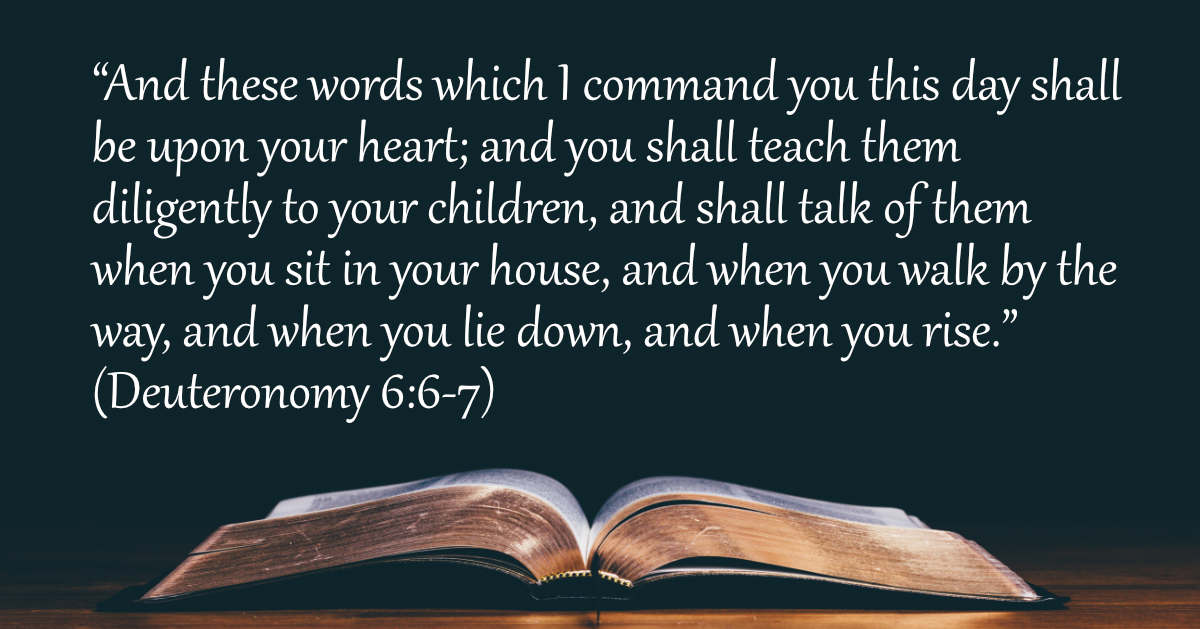
Your Daily Bible Verses — Deuteronomy 6:6-7 — Integrated Catholic Life™

This passage, drawn from Deuteronomy 6:6-7 , reveals the profound responsibility and joy of keeping God’s Word at the very center of our lives. It calls us to embed His commandments within our hearts, shaping our thoughts, actions, and conversations every moment of every day. As we sit in our homes, walk along life’s paths, rise in the morning, and rest at night, our lives become living testimonies of His truth. By teaching diligently and speaking of His Word at every opportunity, we foster not only our spiritual growth but also that of those entrusted to us, particularly our children.

This passage urges us to make the Word of God more than a Sunday ritual—it should be the rhythm of our lives. Just as we breathe without thought, so must we immerse ourselves in His teachings, allowing them to guide us in decision-making, inspire us in difficulties, and fill us with hope and wisdom. The commitment to this practice has eternal benefits; it deepens our relationship with God today and aligns us with His purpose, ensuring everlasting fellowship with Him.

Supporting Scriptures:

  1. Psalm 119:11 (ESV) – “I have stored up your word in my heart, that I might not sin against you.”
  2. Proverbs 22:6 (ESV) – “Train up a child in the way he should go; even when he is old he will not depart from it.”
  3. Colossians 3:16 (ESV) – “Let the word of Christ dwell in you richly, teaching and admonishing one another in all wisdom.”

Moral Thoughts and Takeaways:

  • God’s Word is more than a guide—it’s a lifeline, a source of strength, clarity, and peace.
  • Our homes and our hearts should reflect His presence, creating an atmosphere of love and learning.
  • The benefits of a life rooted in God’s Word are immeasurable, bringing us daily joy and equipping us for eternity.

Reflective Questions:

  1. How often do I allow God’s Word to shape my decisions and attitudes?
  2. Am I creating opportunities to teach and discuss God’s truth with those around me?
  3. What steps can I take to ensure that His commandments remain central in every aspect of my life?

Biblical Analysis Overview: This passage belongs to the Shema, a central declaration of the faith of Israel, emphasizing love for God and obedience to His Word. It highlights not only personal devotion but also communal responsibility. The command to teach children reflects the generational blessing of faithfulness, anchoring future generations in God’s truth.

Practical Application as Christians: We can incorporate these principles into our daily lives by:

  • Beginning each day with scripture and prayer.
  • Sharing meaningful biblical reflections with family or friends during meals or casual conversations.
  • Keeping visible reminders of God’s Word, such as scripture art or note cards, in our homes and workplaces.
  • Modeling Christ-like behavior in our interactions with others.

Prayer: Heavenly Father, we thank You for Your Word that gives life, wisdom, and guidance. Help us to treasure it in our hearts and weave it into every moment of our lives. Grant us the diligence to teach Your commandments to others, especially our children, and the courage to walk in Your ways at all times. May we be lights in the world, reflecting Your truth and love to all we encounter. In Jesus’ name, Amen.

Scripture to Meditate On:
Your word is a lamp to my feet and a light to my path. – Psalm 119:105 (ESV)

Blessing for the Reader:

May God’s Word dwell richly in your heart, guiding your steps and filling you with His peace and joy. May your life bear abundant fruit, and may His promises bring you strength today and a glorious hope for eternity. Amen.

Pin on God's word

DEAR GOD: In You I’m Strong & Have Courage~

Choose Courage over Comfort — Actionalyze

 “Have not I commanded thee? Be strong and of a good courage; be not afraid, neither be thou dismayed: for the LORD thy God is with thee whithersoever thou goest.” – Joshua 1:9 (KJV)

Joshua 1:9 is a powerful and uplifting verse that speaks to the heart of courage and faith. It comes at a pivotal moment when Joshua is about to lead the Israelites into the Promised Land after Moses’ death. This command from God is not just an encouragement; it is a Divine imperative that carries profound significance for both Joshua and believers today.

Biblical Analysis Overview:

  1. Divine Command: The verse begins with a rhetorical question, “Have not I commanded thee?” emphasizing that the instruction to be strong and courageous comes directly from God. This Divine command highlights the authority and assurance that comes from God’s words.
  2. Strength and Courage: The call to be strong and courageous is a recurring theme in the Bible, particularly in the context of facing formidable challenges. Strength here refers to inner fortitude, while courage refers to the absence of fear in the face of danger or uncertainty.
  3. Absence of Fear and Dismay: God instructs Joshua not to be afraid or dismayed. Fear and dismay can paralyze and hinder the fulfillment of God’s plans. By removing these, believers can fully trust in God’s provision and guidance.
  4. God’s Presence: The assurance that “the LORD thy God is with thee whithersoever thou goest” is the cornerstone of this verse. God’s omnipresence means that Joshua, and by extension all believers, are never alone. This presence is a source of comfort, strength, and guidance.

Moral Thoughts and Takeaways:

  1. Faith in Divine Guidance: Joshua’s task was monumental, but his success was anchored in his obedience to God’s command and his unwavering faith in God’s presence. Believers are reminded to trust in God’s guidance in all aspects of life.
  2. Overcoming Fear with Faith: Fear is a natural human response, but this verse encourages believers to overcome fear by relying on God’s promises. Courage is not the absence of fear but the triumph over it through faith.
  3. God’s Ever-Present Help: The promise of God’s Presence is not limited to Joshua; it extends to all who believe. In every situation, no matter how daunting, God’s Presence provides peace and assurance.
  4. Steadfast Obedience: Just as Joshua was commanded to be strong and courageous, believers are called to steadfastly obey God’s commands, trusting that His plans are for their good.

Reflective Questions:

  1. In what areas of your life do you need to be reminded of God’s command to be strong and courageous?
  2. How can you actively overcome fear and dismay in your daily walk with God?
  3. In what ways have you experienced God’s presence guiding and comforting you in challenging times?
  4. How can you cultivate a deeper trust in God’s promises and guidance?

Supportive Scripture:

  1. Deuteronomy 31:6: “Be strong and of a good courage, fear not, nor be afraid of them: for the LORD thy God, he it is that doth go with thee; he will not fail thee, nor forsake thee.”
  2. Isaiah 41:10: “Fear thou not; for I am with thee: be not dismayed; for I am thy God: I will strengthen thee; yea, I will help thee; yea, I will uphold thee with the right hand of my righteousness.”
  3. Psalm 27:1: “The LORD is my light and my salvation; whom shall I fear? The LORD is the strength of my life; of whom shall I be afraid?”
  4. Philippians 4:13: “I can do all things through Christ which strengtheneth me.”

Prayer:

“LORD, as we reflect on Your command to be strong and of a good courage, we ask for Your strength to fill our hearts. Help us to overcome fear and dismay, knowing that You are with us whithersoever we go. Guide us, LORD, in every step we take. May Your Presence be our source of comfort and assurance, especially in times of uncertainty and challenge. Teach us to trust in Your promises and to walk in steadfast obedience to Your will. We lift our hearts in praise and gratitude, confident that Your plans for us are good, and Your love is everlasting. Keep us strong in faith and courageous in spirit, that we may fulfill the purpose You have set before us. In Jesus’ name, Amen.”

Courage Word Cloud Image & Photo (Free Trial) | Bigstock