DEAR GOD: Early I Seek You As My Soul Thirsts For You~

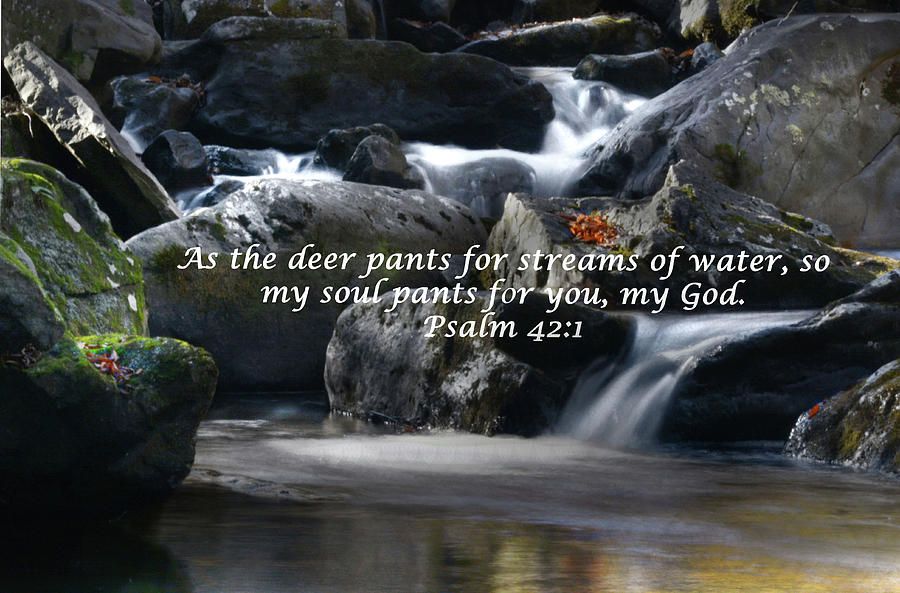
Psalm 42:1. As the deer pants for water, so my soul pants for You, my ...

 so panteth my soul after Thee, O God. –
Psalm 42:1 (KJV) 

__________________________________________________________

  “Desiring & Needing God” 


Introduction: In Psalm 42:1, the psalmist beautifully expresses a longing for God akin to a deer thirsting for water. This metaphor captures the intensity of our desire for a deeper connection with the Divine. Let us explore this theme through scripture, reflection, and prayer.


 The psalmist’s thirst for God mirrors the deer’s desperate need for refreshing streams. Our souls ache for communion with the living God.  This metaphor transcends time, still strongly resonating with us today as Christians. Let us delve deeper into this feeling and longing for His Word, exploring how our hearts should yearn for God’s presence. The psalmist’s thirst mirrors our own spiritual hunger.

Reflection: The Intensity of Spiritual Longing

Consider moments when your soul yearned for God’s presence. What circumstances intensified this longing? Reflect on how spiritual thirst drives us to seek God earnestly. How can we cultivate this hunger in our daily lives?

Meditative Takeaway: Quenching Our Thirst

Just as a deer seeks water to survive, our souls need God’s presence for sustenance. Meditate on the idea that God alone satisfies our deepest longings. How can we prioritize seeking Him?

Like the deer, we must seek God diligently. Prayer, worship, and Scripture nourish our souls. Meditate on Psalm 63: “O God, thou art my God; early will I seek thee: my soul thirsteth for thee, my flesh longeth for thee in a dry and thirsty land.”

How can we prioritize seeking God daily, even amidst life’s challenges?

Relevance Today: A Heart Set on God

In our fast-paced lives, distractions abound. Yet, our hearts should remain fixed on God, especially with the added distractions of the world. We need to block out the “ugly sounds of the world” and commune with the peaceful loving “calm voice” of the LORD.  How can we cultivate this unwavering desire for Him?

Moral Takeaway:

Consider how our longing for God impacts our choices, priorities, and relationships in the modern world.

  1. Thirst for God: The psalmist’s soul thirsts for God, recognizing that true fulfillment comes from seeking Him. In our own lives, we should cultivate a deep longing for God’s presence, knowing that He satisfies our spiritual thirst.
  2. Loving kindness Over Life: The psalmist declares that God’s lovingkindness is better than life itself. This perspective challenges us to prioritize our relationship with God above all else. His love sustains us even in the driest seasons of life.
  3. Praise and Worship: Despite challenging circumstances (the “dry and thirsty land”), the psalmist’s lips praise God. We, too, should offer heartfelt worship, acknowledging His power and glory.
  4. Seeking God Early: The psalm begins with “early will I seek thee.” This encourages us to prioritize seeking God at the start of each day. When we seek Him first, everything else falls into place.

Unity Closing Prayer:

“Heavenly Father, like the deer pants for water, our souls’ thirst for You. We confess our need for Your presence, guidance, and love. Quench our spiritual thirst, O God. Help us seek You diligently, knowing that in You, we find true fulfillment. Unite us as one body, longing for You. In Jesus’ name, amen.”


May our hearts echo the psalmist’s cry, desiring God with an intensity that draws us ever closer to His abundant grace all the days of our lives, and beyond-

The Living... — Psalm 42:1 (NIV) - As the deer pants for streams... 

DEAR GOD: Seeking You In Prayer Daily~

3 Views on Prayer: Which is the Most Biblical? - Bellator Christi

Finding Refuge in God

 Psalm 4 is a heartfelt cry from King David, expressing both his distress and unwavering trust in God. In these verses, we witness David’s dialogue with both God and his adversaries. Let’s dive into the richness of this psalm, as we see the meaning and intent of this Psalm to us as children of Christ!

1. David Talks to God (Psalm 4:1)

“Hear me when I call, O God of my righteousness! You have relieved me in my distress; have mercy on me and hear my prayer.”

  • Passionate Prayer: David’s plea isn’t mere words; it’s a passionate cry for God’s attention. He acknowledges that his righteousness comes from God alone.
  • Past Mercy as Ground for Future Help: David reminds God of His past deliverance, trusting that God won’t abandon him now. Our prayers gain power when we remember God’s faithfulness.

2. David Talks to Men (Psalm 4:2-3)

“How long, O you sons of men, will you turn my glory to shame? How long will you love worthlessness and seek falsehood? Selah. But know that the LORD has set apart for Himself him who is godly; the LORD will hear when I call to Him.”

  • Questioning the Ungodly: David challenges his adversaries. How long will they persist in their destructive ways? He invites them to abandon falsehood and find blessing.
  • God’s Divine Selection: David affirms that God sets apart the godly. Our identity as God’s chosen ones matters. When we align with His will, He hears our cries.

Moral Takeaway

God’s favor rests upon those who fear, love, and serve Him. We, too, can find solace in being set apart for His divine purposes. Let us embrace our identity as the godly. When we walk according to His will and purpose or our lives, all things work out eventually, because God’s plans are best for us. Even when we don’t feel that they are, we might not see the reason immediately – or ever in this lifetime. But suffice to say – God only wants what’s best for His children. All of them, irrespective of their race, sex, social status etc., – He loves us all!

As we go forward, we need to align with His Word, and be obedient and acquiesce to His will, as we humbly serve Him with all of our heart, mind, body and soul. We need to put Him first in ALL we do and all else is second. His ways. His will. His Word – always.

Reflective Question

How can you live out your faith today, knowing that you are set apart by God for His purposes?

Meditative Thoughts

  • God’s mercy sustains us.
  • Our righteousness is a gift from Him.
  • In distress, we find refuge in His presence.

Closing Unity Prayer

“Dear Heavenly Father, thank You for choosing us, setting us apart as Your beloved. May we walk in godliness, guided by Your grace. Grant us strength to withstand opposition, knowing that You hear our cries, and that You are continuously watching over us, in all we do, all the days of our lives, and may we humbly serve You fully today and into eternity. In Jesus’ name, Amen.”


May this psalm resonate in your heart, reminding you of God’s unwavering love and protection as you go through each day of your lives!


Swachch Bharat

DEAR GOD: Your Redeeming Love Touched & Saved Me~

In Christ – Pt. 1 | More Than A Sunday Faith

“But He was pierced for our transgressions, He was crushed for our iniquities; the punishment that brought us peace was on Him, and by His wounds, we are healed.” -Isaiah 53:5 (KJV)

 Isaiah 53 is a powerful chapter that prophetically describes the suffering and sacrificial death of the Messiah. It paints a vivid picture of Jesus as the suffering Servant who willingly bore our sins, bringing redemption and healing to humanity.

Redemption for Our Souls:

Jesus willingly took upon Himself the weight of our sins. His sacrifice on the cross provided redemption—a way for us to be reconciled with God. Through His blood, we find forgiveness and restoration. Our souls, once burdened by guilt, are set free.

Pierced for Our Transgressions:

Jesus was pierced—crucified—on the cross, not for His own sins (for He was sinless) but for ours. His wounds represent the depth of His love and the extent to which He was willing to go to save us. Jesus’ wounds represent our brokenness—our sin-scarred hearts. His sacrifice brings healing, wholeness, and renewal. In Jesus, we see the perfect blend of Divinity and humanity. His incarnation bridges the gap between God and us. His sacrifice restores our true identity as God’s beloved children. We are no longer slaves to sin but heirs of grace.

How does the image of Jesus’ body hanging nailed on the cross impact your understanding of His sacrifice?

Crushed for Our Iniquities:

The crushing weight of our sins fell upon Jesus. His suffering was intense, both physically and spiritually. Our sins have consequences, but Jesus bore them willingly, demonstrating God’s immense love for humanity.

 Imagine the weight of every sin—past, present, and future—pressing down on Jesus. How does this impact your gratitude?

The Punishment for Our Peace:

Jesus endured the punishment that should have been ours. His sacrifice reconciled us to God, bringing peace between sinful humanity and a holy God.

 How does Jesus’ sacrifice bring you peace with God?

Healed by His Wounds:

Physical healing is one aspect, but the deeper healing is spiritual. Through Jesus’ wounds, we find forgiveness, restoration, and eternal life.

Eternal Life and Abundant Living:

Jesus conquered death through His resurrection. His sacrifice offers us eternal life—a hope beyond this earthly existence. Abundant living means more than mere survival; it’s thriving in purpose, joy, and love.

Consider the promise of eternal life. How does it shape your perspective on today?

Consider the wounds—the stripes—on Jesus’ back. How do they symbolize healing for your soul?

Unity Prayer 

Dear Heavenly Father, we thank You for sending Your Son, Jesus Christ, to bear our sins and bring us healing. May His wounds remind us of Your boundless love and the price He paid for our redemption. Help us live in gratitude, sharing this message of hope with others. In Jesus’ name, amen.

_______________________________________________________________

 Meditative Takeaway

As we contemplate and meditate of the Holy Word of the LORD in Isaiah 53:5, let us embrace the truth that Jesus’ wounds are our healing. May His sacrifice draw us closer to Him, inspire compassion for others, and ignite a desire to share the Good News. 

DEAR GOD: May We Have Wisdom To Speak Your Word~

Pin on || Jesus


~Wisdom to Speak Under God’s Correction~

Psalm 39- reflects on the frailty of human life, the fleeting nature of our days, and the need to place our hope in God. It acknowledges our tendency to sin with our words and emphasizes seeking wisdom and forgiveness from the Lord. The closing prayer asks for strength and mercy as we journey through life.

__________________________________________________________________

 Psalm 39 – is attributed to King David, though its specific context remains uncertain. It opens with David’s inner struggle to guard his words wisely, especially when facing the wicked. The psalm is a prayer for wisdom and self-control, emphasizing the fleeting nature of life and the need to place our hope in God.

__________________________________________________________________

 Silent Agony -Verses 1-3

David begins by resolving to guard his tongue, lest he sin in the presence of the wicked. He chooses silence even from speaking good, recognizing that his words could be misunderstood or misused.

Reflective Question: How can we exercise wisdom in our speech, especially when faced with opposition or temptation?

_______________________________________________________________

Inner Turmoil -Verse 3

David’s silence leads to inner turmoil; his heart grows hot, and the fire of emotion burns within him. Sometimes silence isn’t golden; it can stir up intense feelings and create inner conflict.

Reflective Question: When have you experienced inner turmoil due to unexpressed emotions or thoughts?

____________________________________________________________________

Seeking Wisdom- Verses 4-6

David turns to the Lord, asking for insight into his life’s purpose and the brevity of his days. He acknowledges life’s fleeting nature, emphasizing that even at our best, we are mere vanity.

Reflective Question: How can we seek God’s wisdom in understanding our purpose and the brevity of life?

___________________________________________________________________

David’s Prayer -Verses 12-13

David pleads with God to spare him, allowing him to recover strength before departing this life. His prayer acknowledges his status as a stranger and sojourner, longing for God’s mercy.

Reflective Question: How can we cultivate a heart that seeks God’s mercy and strength in our journey?

  •  Ecclesiastes 3:1-8 reminds us of life’s seasons and the importance of seeking God’s purpose in each.
  • James 1:19 encourages us to be slow to speak and quick to listen, recognizing the power of our words.
  • Proverbs 16:24 emphasizes that gracious words are like honeycomb—sweet to the soul and healing to the bones.

____________________________________________________________________

Unity Prayer

“Dear Heavenly Father, as we journey through this fleeting life, grant us wisdom to guard our tongues and speak with discernment. Help us find solace in Your presence, knowing that our days are but a handbreadth. May our hearts burn with passion for You, and may our words reflect Your grace. Lord, spare us, strengthen us, and guide us as we walk as strangers in this world. In Jesus’ name, we pray. Amen.”

_______________________________________________________________

Meditative Takeaway

Reflect on the brevity of life and the impact of your words. Seek God’s wisdom, and may your speech be a reflection of His love. Remember that even in silence, our hearts can burn with purpose. May you find strength and mercy as you journey onward.

God always invites us to meditate and explore His Word.  May we all delve into Psalm 39 further. May it inspire you to seek wisdom and grow in your faith journey.

______________________________________________________________

Psalm 39:1-13 (KJV)

I said, I will take heed to my ways, that I sin not with my tongue: I will keep my mouth with a bridle, while the wicked is before me.

I was dumb with silence, I held my peace, even from good; and my sorrow was stirred.

My heart was hot within me, while I was musing the fire bur

ned: then spake I with my tongue,

Lord, make me to know mine end, and the measure of my days, what it is: that I may know how frail I am.

Behold, thou hast made my days as an handbreadth; and mine age is as nothing before thee: verily every man at his best state is altogether vanity. Selah.

Surely every man walketh in a vain shew: surely they are disquieted in vain: he heapeth up riches, and knoweth not who shall gather them.

And now, Lord, what wait I for? my hope is in thee.

Deliver me from all my transgressions: make me not the reproach of the foolish.

I was dumb, I opened not my mouth; because thou didst it.

Remove thy stroke away from me: I am consumed by the blow of thine hand.

When thou with rebukes dost correct man for iniquity, thou makest his beauty to consume away like a moth: surely every man is vanity. Selah.

Hear my prayer, O Lord, and give ear unto my cry; hold not thy peace at my tears: for I am a stranger with thee, and a sojourner, as all my fathers were.

O spare me, that I may recover strength, before I go hence, and be no more.  

DEAR GOD: Your Love Preserves Me In All I Do~

1 John 4:8 God is Love Bible Verse

  “Preserve me, O God, for in you I take refuge.”
(Psalm 16:1, ESV)

Preserving Refuge –In the quiet chambers of our hearts, we seek refuge—a sanctuary where our souls find solace amidst life’s tumultuous storms. Psalm 16:1, attributed to David, echoes this universal longing for safety and protection. Let us journey together through this sacred verse, uncovering its layers of significance.

__________________________________________________________________

 Seeking Refuge

David, a warrior and poet, understood the fragility of human existence. His life was marked by battles, betrayal, and danger. Yet, in the midst of adversity, he turned to God as his refuge. The word for “preserve “implies safeguarding, keeping, and cherishing. David pleads with God to preserve him—to shield him from harm and provide a safe haven.

Trusting in God Alone

David’s declaration, “for in You I take refuge,” reveals profound trust. He acknowledges that true security lies not in earthly fortifications but in the Almighty. In a world of shifting sands, David anchors his soul in the unchanging Rock. We, too, can find refuge by entrusting our lives to God’s unwavering care.

Reflective Questions

  1. Where do we seek refuge when life’s storms rage?
  2. Are we relying on our own strength or turning to God?
  3. How can we cultivate a deeper trust in God as our ultimate refuge?

Moral Thoughts

The Illusion of Self-Sufficiency

Often, we build false fortresses—wealth, relationships, achievements—believing they will shield us. Yet, they crumble, leaving us vulnerable. True refuge lies beyond our abilities; it resides in the One who upholds the universe.

Vulnerability and Authenticity

Acknowledging our need for refuge requires vulnerability. It’s an admission that we are not invincible. Authentic faith embraces weakness, allowing God’s strength to shine through.

Meditative Takeaway

  • Reflect: Pause and consider where you seek refuge. Invite God into those spaces.
  • Trust: Embrace vulnerability, knowing that God’s preserving hand is your true shelter.
  • Pray: Offer your heart’s cry to the One who preserves and protects.

Additional Insights

The Fragile Beauty of Trust

Trusting God is not a sign of weakness; it’s an acknowledgment of our humanity. Like delicate petals, our trust in God blooms even in adversity.

The Refuge of Community

Sometimes, God’s refuge comes through human connections—a friend’s listening ear, a neighbor’s kindness. Let us be vessels of refuge for others, reflecting God’s love.

The Eternal Refuge

Our earthly refuges are temporary, but God’s refuge endures forever. As we navigate life’s uncertainties, may we find solace in the eternal arms that hold us. In Psalm 16:1, we find an invitation—to lay down our self-sufficiency and find refuge in the arms of the Eternal, One and only LORD!

Unity Prayer:

“Dearest Heavenly Father, preserve us as we take refuge in You. Shield us from life’s storms, both seen and unseen. May our trust in You deepen, and may our hearts find rest in Your unwavering love, in Jesus’ precious name, Amen.”

_______________________________________________________________

May this verse resonate within all of us, guiding us toward the unshakable refuge that transcends time and circumstance, guiding us as we meditate on the power of His Word and promises, that we can always trust in the LORD, and rely on Him for all things at ALL times… 

DEAR GOD: Thank You For Your “Everlasting Mercy and Righteousness”

Jeremiah 31:3 'Loved you with Everlasting Love' Wall Art Canvas Print

“But the mercy of the LORD is from everlasting to everlasting upon them that fear him, and his righteousness unto children’s children; To such as keep his covenant, and to those that remember his commandments to do them.” -Psalm 103:17-18


 “Everlasting Mercy and Righteousness”


The psalmist, King David, reflects on the enduring attributes of God—His mercy and righteousness. These verses remind us that God’s goodness transcends time, reaching from eternity past to eternity future. Please join me to explore and delve deeper into these themes, with our eyes, ears, and heart for the LORD, asking for His wisdom to understand and apply His Word into our lives today, and every day!


 Everlasting Mercy: The psalmist declares, “But the mercy of the LORD is from everlasting to everlasting upon them that fear Him.” Here, we encounter the boundless compassion of our Creator. God’s mercy is not a fleeting emotion; it is an eternal stream that flows toward those who revere Him. Consider the following aspects:

Unfading Grace: Our lives are transient, like flowers that bloom and wither. Yet, God’s mercy remains constant. It existed before time began and will endure beyond our earthly existence.

Fear and Reverence: The psalmist emphasizes that this mercy is upon those who fear the Lord. Not a servile fear, but a filial reverence—a deep awe and respect for God. Such reverence opens the floodgates of divine mercy.


Righteousness unto Children’s Children: Continuing, the psalmist adds, “And His righteousness unto children’s children.” Here, we encounter God’s faithfulness across generations.

Covenant Faithfulness: God’s righteousness extends to the descendants of those who walk in His ways. It is not merely an act of kindness but a fulfillment of His covenant promises.

In Exodus 20:6, God declares that He shows mercy to thousands of generations of those who love Him and keep His commandments.

Conditions and Continuity: The psalmist subtly reminds us that God’s blessings are conditional. They flow to those who faithfully remember His commandments. Our spiritual heritage depends on our fidelity to God’s covenant.


Reflective Questions:  As we meditate on these verses, let us consider:

  • How can we cultivate a reverential fear of God in our lives?
  • Are we passing on a legacy of righteousness to our children and grandchildren and other significant people in our lives?
  • What practical steps can we take to ensure that God’s mercy endures in our family lineage?

Moral Takeaway: God’s mercy is not bound by time or circumstance. It extends from eternity past to eternity future. As recipients of His mercy, we should approach life with gratitude and compassion toward others.

The fear of the Lord is not about trembling in terror but standing in awe of His majesty. It’s a reverential respect that acknowledges His sovereignty. When we fear God, we align our hearts with His purposes.

Our faithfulness impacts future generations. Just as God’s righteousness extends to children’s children, our choices influence our family lineage. We have a responsibility to model godly living.

Prayer unites us with God’s purposes. As we pray for our families, we invite His mercy and righteousness to flow through generations. Our unity in prayer strengthens our spiritual heritage.

__________________________________________________________

Unity Prayer: Let us unite our hearts in prayer.

“Dear Heavenly Father, we stand in awe of Your everlasting mercy. May our lives reflect reverence for You. Help us pass on the torch of righteousness to future generations. May Your covenant promises be fulfilled in our families. In Jesus’ name, we pray. Amen.”


 Psalm 103:17-18 invites us to embrace the eternal perspective as we meditate on the meaning and content of the Word.  God’s mercy and righteousness span beyond our brief existence, weaving a tapestry of grace across generations. Let us walk in reverence, keeping His commandments, and trust that His mercy will endure forever…

DEAR GOD: I Have   Confidence in You and Your Divine Discipline

What does god’s discipline look like – Socialest

 “I have confidence in the Lord that you will take no other view, and the one who is troubling you will bear the penalty, whoever he is.” – Galatians 5:10 (ESV) –

Context and Background:

The Apostle Paul wrote the letter to the Galatians to address a serious issue: false teachers were infiltrating the church, promoting legalism, and undermining the gospel of grace. These Judaizers insisted that Gentile believers must follow Jewish customs and laws to be truly saved. Paul’s response was passionate and urgent, emphasizing salvation by faith in Christ alone.

 Confidence in the Lord:

Paul begins with a bold statement: “I have confidence in the Lord.” His trust is not in human abilities but in God’s work within the Galatian believers.

As Christians, we can also have confidence in God’s faithfulness. He who began a good work in us will carry it to completion (Philippians 1:6).

Unity and Sound Doctrine:

Paul expects the Galatians to remain steadfast in their faith and not be swayed by false teachings.

We, too, should hold fast to sound doctrine and avoid being led astray by deceptive ideas or worldly philosophies.

Divine Discipline:

The phrase “the one who is troubling you” refers to those promoting legalism and undermining grace.

God’s discipline is not necessarily punitive but corrective. False teachers will face consequences for their actions.

Reflective Questions:

  • Where do we place our confidence? Are we relying on our abilities or trusting in God’s faithfulness?
  • How do we discern false teachings? What safeguards can we put in place to avoid being led astray?
  • Have we experienced God’s corrective discipline? How has it shaped our faith and understanding?

Meditative Thoughts:

  • Confidence in God: Our confidence rests not in ourselves but in the Lord who sustains us. May we walk in His truth and grace.
  • Spiritual Vigilance: Let us be vigilant against false teachings, seeking wisdom from the Holy Spirit to discern truth from error.
  • God’s Corrective Love: Divine discipline is an expression of God’s love. It redirects us toward His perfect will.

A Moral Story: “The Gardener’s Pruning”:

Once, in a beautiful garden, a skilled gardener tended to a young fruit tree. The tree grew lush and green, but its branches tangled and twisted. The gardener knew that without pruning, the tree would bear little fruit.

One day, the gardener approached the tree with shears in hand. The tree trembled, fearing the pain of the cut. But the gardener spoke gently, “Trust me, little tree. This pruning is for your good.”

As the shears snipped away dead branches and unruly growth, the tree winced. Yet, with each cut, it felt lighter, freer. The gardener whispered, “I am shaping you for abundance.”

In time, the tree blossomed. Its branches stretched toward the sun, laden with sweet fruit. The gardener smiled, knowing that the pruning had borne fruitfulness.

Such is our lives today. At times we need the “Master’s” hands to shape us and prune us of issues and circumstances that might be inhibiting our growth in Him which-ultimately- may be rotting our roots in Christianity. So at times our growth may be “painful” but in the overall picture and aftermath, it will be worth it as we develop higher into the realm of our faith and love for the LORD!

How Can We Apply This Today:

  • Unity: Let us stand united in the gospel of grace, rejecting legalism and embracing Christ’s finished work.
  • Discernment: May we discern false teachings and hold fast to sound doctrine.
  • Trust: Like the pruned tree, trust God’s loving discipline—even when it hurts—knowing it leads to abundant life.

Unified Prayer:

“My Dear Lord, grant us unwavering faith and confidence in You. Help us discern truth from error, and may we remain anchored in Your Word. Strengthen us to resist troubling influences and uphold sound doctrine. Help us in the growth of our spirituality, help us to get closer to You in all we do and say, all the days of our lives. In Jesus’ name, Amen.”


May this encourage us to walk confidently in the LORD’s truth, and offer us encouragement in a dark world, as we follow His Light, and embrace His love, while we love Him in return!”

PPT - God’s Discipline PowerPoint Presentation, free download - ID:3115518

DEAR GOD: Waiting Quietly For You & Loving You~

Waiting For the Lord - Zeteo 3:16

Waiting Quietly for Salvation: A Reflection on Lamentations 3:26

The book of Lamentations, attributed to the prophet Jeremiah, is a collection of poetic laments expressing grief, sorrow, and longing. Amidst the desolation and suffering, we find a gem of wisdom in Lamentations 3:26:

“It is good that a man should both hope and quietly wait for the salvation of the LORD.” 

This verse invites us to pause, reflect, and consider the virtue of patient waiting. Let us journey through its depths, drawing insights and inspiration.

The Beauty of Quiet Waiting

Waiting is an inevitable part of the human experience. We wait for healing, for answers, for breakthroughs, and for redemption. Yet, in our fast-paced world, waiting is often seen as a burden—a wasted moment. Lamentations 3:26 challenges this perspective. It reminds us that waiting can be a sacred space—a place where our souls find rest and our trust in God deepens.

 The Quietness of Faith

“Wait quietly,” the verse says. Not with anxious pacing or fretful impatience, but with a quiet heart. Faith thrives in the stillness—the moments when we surrender control and allow God’s timing to unfold. In quiet waiting, we learn to listen to His whispers, to discern His movements, and to find solace in His promises.

Reflective Questions

  • How do you typically approach waiting?
  •  Are you restless or serene?
  • What does “quiet waiting” mean to you?
  • How can you cultivate it in your life?

Takeaway Thoughts

Patience as a Virtue: Waiting is not passive; it’s an active discipline. Patience molds our character, teaching us endurance and trust.

God’s Timing: When we wait quietly, we acknowledge that God’s timing is perfect—even when it doesn’t align with ours.

Hope in the Silence: In the quietude of waiting, hope blossoms. Our salvation is assured, even if we cannot yet see it.

Moral Overview

Lamentations 3:26 teaches us that waiting is not wasted time. It is an invitation to draw near to God, to lean into His promises, and to find strength in our quiet trust.

Closing Unity Prayer

“Dear Heavenly Father, grant us the grace to wait quietly. May our hearts find rest in Your timing, and may our faith deepen as we anticipate Your salvation. In Jesus’ name, Amen.”


May this reflection on Lamentations 3:26 bring comfort and encouragement to your soul, as you joyfully and patiently wait on the LORD, and may you meditate on the goodness of the LORD and all that He is…

DEAR GOD: So Safe In Your Shadow~

Psalm 91:4 (KJV) — Today's Verse for Tuesday, October 9, 2007

LORD GOD MY REFUGE & MY PROTECTOR


Psalm 91 is a beautiful and reassuring passage that speaks of God’s protection, comfort, and care for those who trust in Him. Let’s delve deeper into this psalm, focusing on the second verse and its broader themes, and how it pertains to God’s children this every day!


Psalm 91: Dwelling in the Secret Place

Psalm 91 is often called the “Soldier’s Psalm” or the “Psalm of Protection.” It provides a powerful reminder of God’s unwavering love and shelter for His people.  It is a very powerful and reasuring psalm for Christians and those of faith – as it certainly outlines and defines God’s unwavering love and support for us, His children.

Verse 1-2: Dwelling in the Secret Place

“He who dwells in the secret place of the Most High shall abide under the shadow of the Almighty. I will say of the LORD, ‘He is my refuge and my fortress; my God, in Him I will trust.’”
(Psalm 91:1-2)

The Secret Place:

Imagine a hidden chamber within God’s dwelling—a place of intimacy and safety. When we dwell there, we experience His presence and protection. However, no matter where we are or what we are doing, God’s portection looms large and consistently of those who follow Him, and His Word. Those who put their faith in Him and those who love Him fully and completely!

The Shadow of the Almighty:

This phrase suggests nearness. Just as we walk close to a companion to feel their shadow, we can draw near to God and find refuge in His shadow. Everyone near to God is in His shadow – His shadow a significant covering for those who seek Him and His love. His Presence is with us as we go through our life each day, and this Psalm is a special reminder of His Omnipotence and His Sovereign Power!

Reflections and Questions

  • Where is your secret place with God? -Consider moments when you’ve felt closest to Him—during prayer, worship, or quiet reflection.
  • How does God’s protection impact your daily life? -Reflect on times when you’ve sensed His shelter during challenges or trials.

Verse 9-16: God’s Promises

“Because you have made the LORD, who is my refuge, even the Most High, your dwelling place, no evil shall befall you, nor shall any plague come near your dwelling.” (Psalm 91:9-10, NKJV)

  • God’s Promises: He assures us of safety, deliverance, and victory. We are not exempt from difficulties, but God’s Glorious Presence sustains us.
  • Angelic Protection: His Angels guard us, ensuring our safety. Their presence reminds us that God fights on our behalf.


Unity Prayer  

“Dear Heavenly Father, Thank You for being our refuge and fortress. As we dwell in Your secret place, shield us from harm and fear. May we trust You completely, knowing that no evil can prevail against us. Send Your heavenly host of angels to watch over us and grant us courage to face life’s challenges, In Jesus’ name, we pray. Amen.”

___________________________________________________________

Meditative Thoughts

God’s shadow: Imagine standing under the protective shadow of a mighty oak tree. God’s shadow is a gazillion times more secure and then some!

Walking in faith: Trusting God means walking closely with Him, allowing His Shadow to fall upon us. And to feel comfort and secure in His Presence!


May you meditate and pause for reflection on Psalm 91 -and may it strengthen your faith and remind you of God’s unfailing love-always. 🙏


Psalm 91:4 - Wellspring Christian Ministries

DEAR GOD: Heal Us, Lead Us, Love Us -Always~

There is power in the name, there is healing in the name of Jesus ...

Hezekiah’s Healing and Restoration

In this verse, we witness a powerful moment in the life of King Hezekiah, who ruled over Judah during a tumultuous period. Hezekiah fell seriously ill, and the prophet Isaiah delivered a message from the Lord: “Turn again, and tell Hezekiah the captain of my people, Thus saith the Lord, the God of David thy father, I have heard thy prayer, I have seen thy tears: behold, I will heal thee: on the third day thou shalt go up unto the house of the Lord. And I will add fifteen years to your life…”  
2 Kings 20:5-6 (KJV)

Let’s take a closer look at this verse and delve in a little closer and deeper to what it means and could mean to us today in this world.

  1. Hezekiah’s Desperation: Hezekiah was in distress, facing a life-threatening illness. His prayer and tears reflected his deep longing for healing and restoration.
  2. God’s Compassion: The Lord responded to Hezekiah’s cry. Despite the king’s imperfections, God’s compassion extended to him because of his lineage—Hezekiah was a descendant of David, a man after God’s own heart.
  3. Healing and Timing: God promised healing. The specific mention of the third day adds significance. It echoes the resurrection theme—the third day when Jesus rose from the dead. Hezekiah’s healing foreshadows the ultimate healing we receive through Christ.

Relevance for Christians Today

Prayer and Tears: Like Hezekiah, we face trials, sickness, and emotional struggles. Our prayers and tears matter to God. He hears us and responds with compassion. He listens to every single prayer and sees every single thing we are experiencing and going through, and He never stops caring!

Divine Timing: Sometimes God’s healing doesn’t come instantly. We must trust His timing. The third day symbolizes hope beyond our immediate circumstances. Jesus’ resurrection reminds us of victory over sin and death. We are to “wait on the LORD and know He is God!” (Psalm 46:10)

The House of the LORD: Hezekiah was instructed to go to the temple. For us, it represents the Church—the community of believers-and we are ONE body in CHRIST. The Church is Christ. And that “church” is within each of us. We find healing, encouragement, and restoration in fellowship with other Christians, as we share the love of Christ and power of Christ. And especially by reading His Word, believing in His Word, “hearing His voice” and embracing His commandments and Gospel of Christ!

Reflective Questions

  • How do you approach God in times of need?
  • Have you experienced healing or restoration in your life?
  • What role does community play in your spiritual journey?

Powerful Unity Prayer

“Dear Heavenly Father, like Hezekiah, we bring our prayers and tears before You. You see our hearts, our struggles, and our longing for healing. Grant us patience to wait for Your perfect timing. May we find solace in the fellowship of believers, but mainly in YOU, knowing that Your Church is a place of restoration. In Jesus’ name, Amen.”

________________________________________________________

Meditative Take Away Thoughts On the third day, He rose again.” Let this truth anchor your faith, knowing that God’s promises endure beyond our present circumstances. That He is with us always, and He will support us through everything we are going through, all the days of our lives, and beyond!